Events

Send us an e-mail if you have an event or live music listing you'd like us to include here. info@quepolandia.com

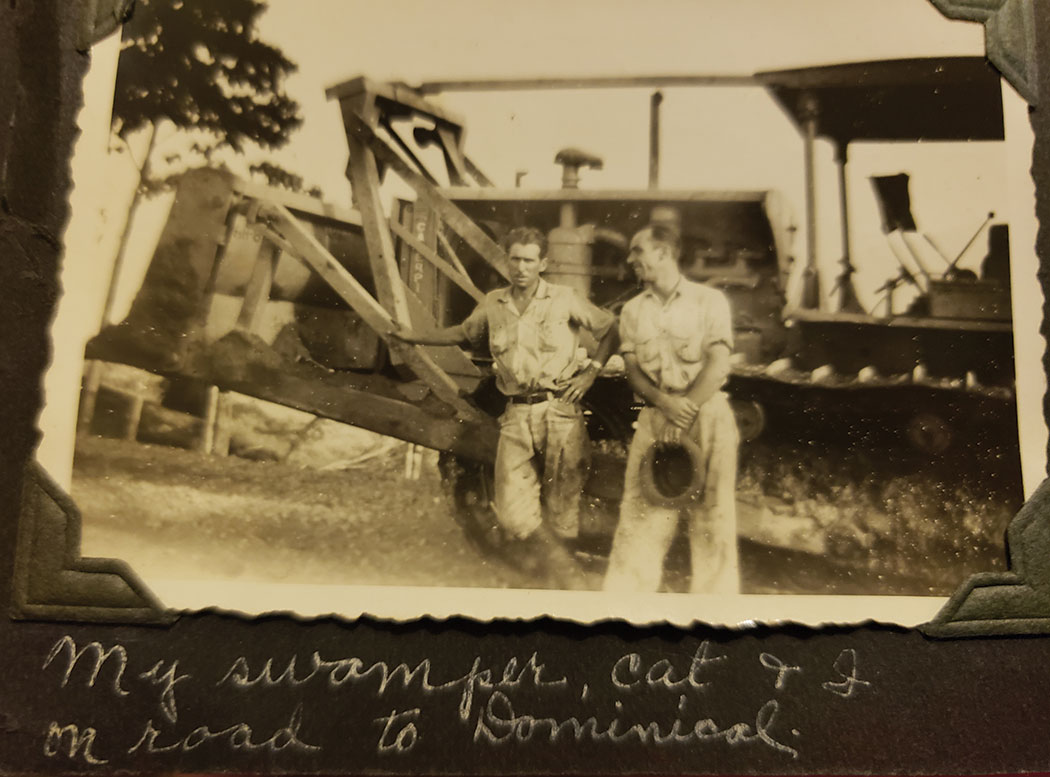
Costa Rican Moonshine

Clandestine Still

Clandestine Still

 By Jack Ewing

I haven’t had a drop to drink, of any alcoholic beverage, since May 17, 1977. I quit drinking because I figured that I had already drunk enough to last me a lifetime, and it wasn’t necessary to drink any more. Prior to that date, I was quite an expert on all things relating to alcoholic beverages including Costa Rican moonshine, known locally as guaro contrabando.

Hacienda Baru

Read More…

Tree Mining, Cardboard Boxes, & Poison Sawdust

By Jack Ewing

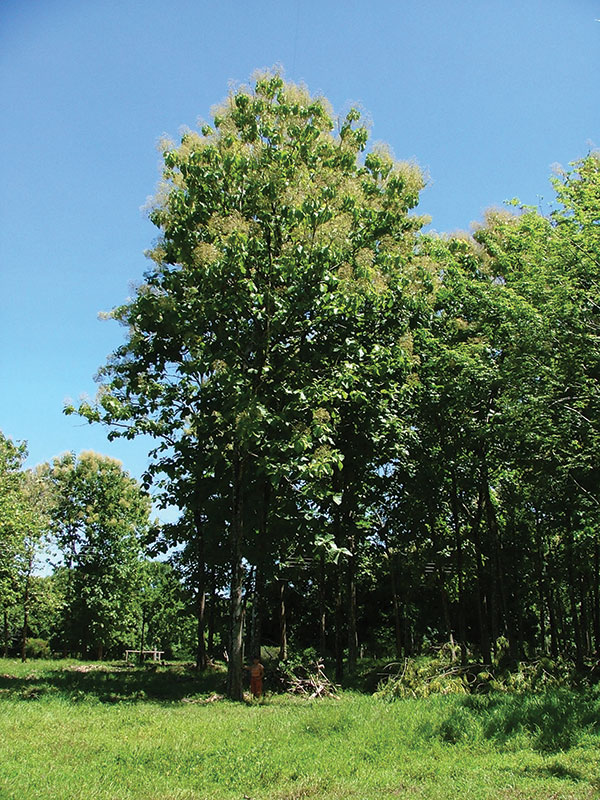
Gmelina arborea leaves

Gmelina arborea leaves

Carpenters, builders and sawmill operators love it; chicken and pig farmers hate it; and environmentalists have mixed feelings about it. I have heard people say that the gmelina tree (Gmelina arborea) is a plague that should be eradicated from the face of the earth, yet others believe that it is a miracle tree with great potential for the recuperation of ecosystems and the environment. Regardless of what you believe about the gmelina tree – native to southeast Asia – the story of how it got to the Americas and how Costa Rica came to plant 25,000 hectares of it, is a fascinating tale.

Hacienda Baru

Read More…

More than Sustainable

By Jack Ewing

The Merriam-Webster online dictionary defines the word “sustainable” as: “of, relating to, or being a method of harvesting or using a resource so that the resource is not depleted or seriously damaged.” The word has been in use for a long time, at least since 1727 according to Merriam-Webster. In recent years, with increased interest in our environment and concern over the rate of depletion of our natural resources, the word has come into popular usage. Information about how to live sustainably is readily available, as are products for sustainable ways of doing things. Energy efficiency is of utmost importance followed by water efficiency, social responsibility, general environmental friendliness and others.

In environmental terms being sustainable means that we don’t use resources faster than they can be reproduced. Our actions do not cause the environment to deteriorate. If we are sustainable we can continue to do things in the same manner indefinitely and the environment will remain pretty much the same. The word doesn’t necessarily mean that the environment is in great shape; it only means that it is not getting any worse. 

Hacienda Baru

Read More…

A Ball of Fluff Called Equinox

Boy What a Good Bug

Boy What a Good Bug

By Jack Ewing

Equinox is a Latin word meaning “equal night.” Twice each year, when the sun shines directly over the equator, day and night are the same length all over the globe. These two dates are called the March equinox and the September equinox. The March equinox, which marks the beginning of spring in the northern hemisphere, always falls on March 20 or 21, and the September equinox, which marks the beginning of fall, always falls on September 22 or 23. The March equinox in the year 2009 fell on March 20, and that was the day that a little ball of fluff came walking into my office at 6:30 in the evening just as I was thinking about closing up and going home. It was obviously a very young owl, nearly ready to fledge, but not yet able to fly. We had heard an owl calling near the office on quite a few occasions, and I surmised that this youngster had fallen out of it’s nest, and that its chances of getting back were almost nil.

Hacienda Baru

Read More…

Turtle Season, 2011

Returning to the Sea

Returning to the Sea

By Jack Ewing

The date was October 16, 2008, the time 4:30 PM. Steve and Peggy Sue watched as the bulky form emerged from the shallow waves and began dragging itself up on the moist sand of Barú Beach. It was a strange sight to behold, especially in the afternoon. Olive Ridley Marine Turtles (Lepidochelys olivacea) don’t normally come out of the sea and lay their eggs during daylight hours. In fact, they normally steer clear of the moonlight, only appearing on the beach when the night is pitch black. But here she was, in all her glory, awkwardly pulling herself up the beach with flippers that looked better suited for maneuvering around in the sea than dragging a hundred pounds of dead weight across the sand. When she reached a point where thousands of years of accumulated instinct told her that the beach looked right, the female began to dig with paddle-like rear flippers. The digging continued until she could reach no deeper. After positioning her backside over the hole  she began to expel the flexible, white, leathery spheres shrouded in thick mucous, each about the size and shape of a golf ball. The eggs plopped into the hole one by one until no more remained inside the reptile. The female began scooping the sand back into the hole covering the precious eggs that would assure the future of her species. She positioned her hard bony underplate, over the mound of sand and, using her flippers, raised her heavy body into the air and quickly let it fall with a resounding thud, repeating the process until the nest was firmly packed. Near exhaustion, the female Olive Ridley Turtle began her labored trek back to the water’s edge stopping frequently to rest until, at last, she was swallowed by the vastness of the sea. Noticing the encroaching darkness, Steve glanced at his watch. The time was 5:30 PM. “We’d better get back to the lodge,” he said. “Nightfall comes quickly in the tropics.”

Hacienda Baru

Read More…

A One-Colored Big “Small” Cat

Puma Concolor – photo by Alan Olander

Puma Concolor – photo by Alan Olander

Where have all the coatis gone?

By Jack Ewing

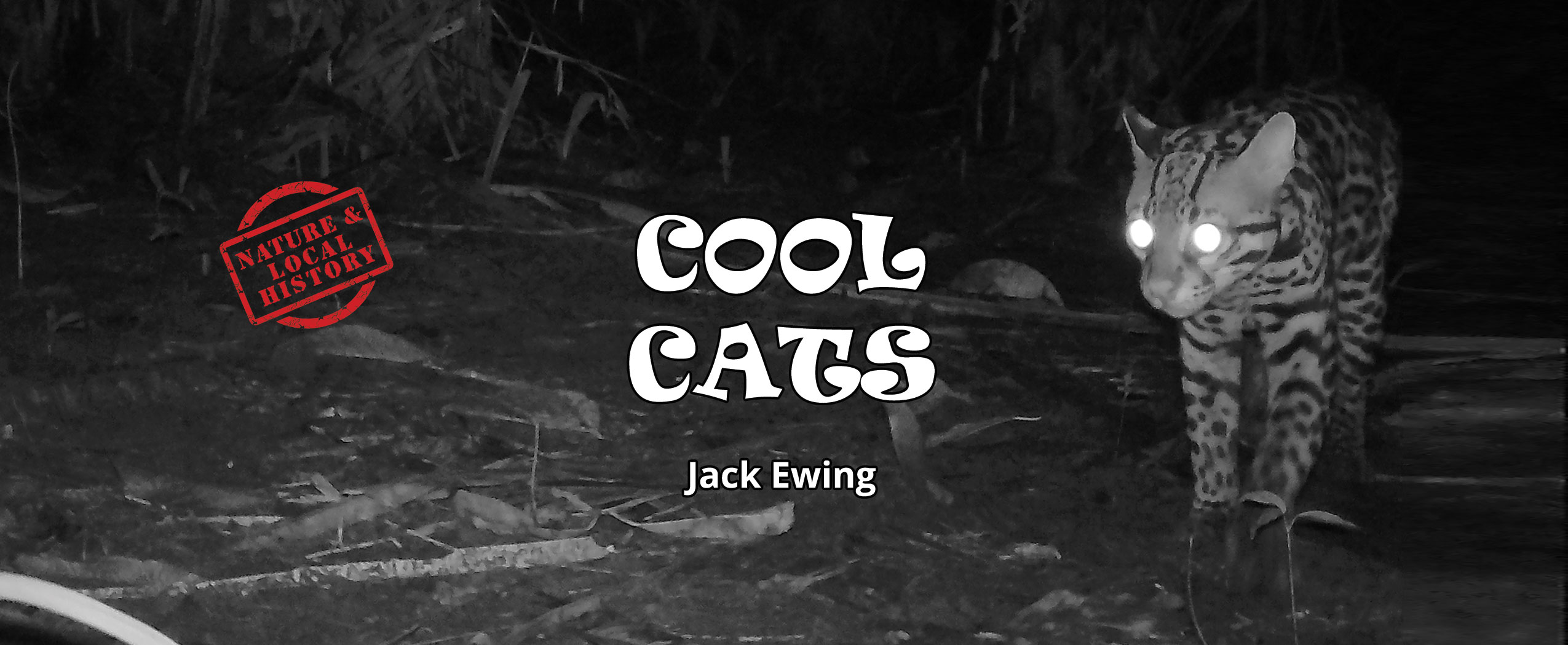
Gatun Lake was created when the Panama Canal was built. Before the area was flooded there was nothing but primary rainforest. Once the lake was full only the top of a mountain remained above water. Today that 15.6 square kilometers of forest covered mountain top is known as Barro Colorado Island, and it is one of the most intensively studied rainforests in the world. At some point scientists noticed that bird populations on the island were diminishing, and they endeavored to find out why. As it turned out, the root of the problem had to do with big cats. When the lake was flooded a few pumas and jaguars ended up on Barro Colorado. Since the island was too small to support even one large cat for any length of time they all eventually swam to shore. That’s when the birds started diminishing. Without pumas and jaguars to prey on the coatis and raccoons their populations increased rapidly. Both of these mammal species are omnivorous, both are semi arboreal, both are opportunistic predators, and they wreaked havoc on the nesting birds. As often happens when Mother Nature is allowed a free rein, the problem eventually solved itself. From time to time a large cat will swim to the island, stay and hunt until the prey base is thinned considerably, and swim back to the mainland. This keeps populations coatis and raccoons more or less under control.

Hacienda Baru

Read More…

The Eternal Problem of Poaching

You Can Diminish It, But You Can’t Stop It Completely

By Jack Ewing

In February of 2003 I had the opportunity to visit the Sirena Biological Station located on the Pacific side of Corcovado National Park on the Osa Peninsula. We met several University of Costa Rica biology students who were participating in. Dr. Eduardo Carillo’s long standing study of jaguars (Panthera onca) at Corcovado. They were searching for signs of the jaguar’s primary prey, the white-lipped peccary (Tayassu pecari,)  more commonly known as the wild pig. For an entire week they saw only the smaller collared-peccary (Pecari tajacu.)  When asked why the jaguars and their prey were suffering serious population reductions, the UCR students stated that poaching in Corcovado was out of control.
Hacienda Baru

Read More…